What you can expect from my leadership
My leadership style is rooted in empathy, curiosity, and trust.
I believe teams do their best work when people feel seen and safe to share ideas, challenge assumptions, and learn from each other. I aim to create a human-first environment where designers feel supported to take ownership of their work while staying deeply focused on the people we’re designing for.
I lead collaboratively, with low ego and and a constant drive towards action. My role is to connect dots across teams, remove obstacles, and help translate big platform goals into meaningful work for the team.
My super powers are pattern-recognition, information synthesis, and story-telling.
I am able to analyze research or complex ideas or systems and create visualizations and narratives that help an array of audiences understand the concepts. I’ve often been the translator between internal working groups and leadership teams, as well as between young people and adults (who aren’t quite sure how to talk to or work with kids).
Getting started at an organization
Listening Tour & Onboarding Plan
As a director, its my job to learn and understand both the product ecosystem and the organizational ecosystem before jumping in and suggesting changes.
I conduct listening tours with the team members I manage, along with all cross-functional groups to understand how the departments have been successful in their collaboration and where there are areas for improvement.
This example (on the right) shows the results of a listening tour (with some information masked). I listened closely to the experiences of all teams whom I’d be collaborating with, identified key themes and pain-points, and proposed potential solutions through my 30-60-90 plan.
Educating & Advocating for Product Design
A solution to address some of the communication and transparency pain-points described in the listening tour was to:
Create a base-level knowledge about design thinking and product design and development across teams
Level-set the goals, priorities, and expectations for the design department
Re-introduce the Design Team to the broader organization and share best practices on how to work with them
Examples from cross-departmental presentation:
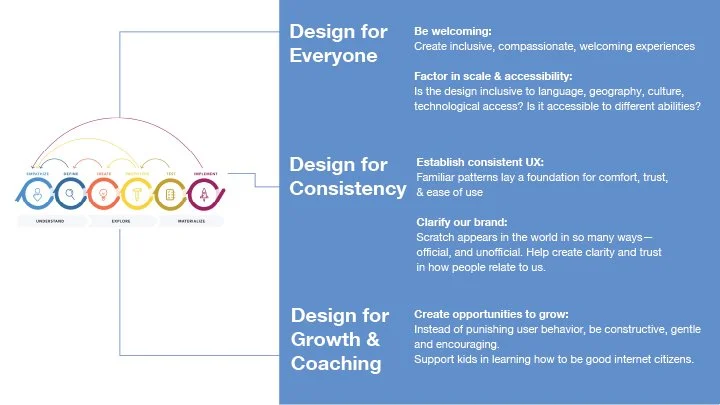
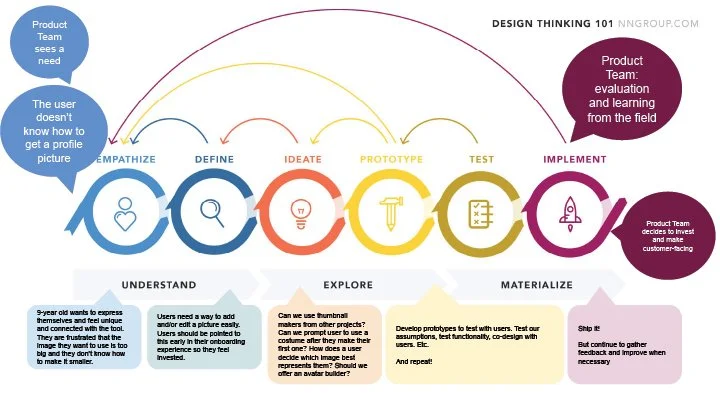
Explanation of design thinking and development processes shared to level-set the org’s knowledge and expectations
High-level overview (with metaphors!) of how product, engineering, and design teams work together through the product development process, define roles and responsibilities, and depend on one another for success
Best-practices and processes for working with the design team shared to inform and advocate for the design process